Showing posts with label Award Programme. Show all posts

Wednesday, 15 February 2017

Kindness in giving creates love

Satyans (Sat Paul Mittal School) of the IAYP club believe that “Kindness in words creates confidence, Kindness in thinking creates profoundness, and Kindness in giving creates love." And truly, this is just the beginning.

The journey began on 29th July, 2016 when the IAYP Club students at Sat Paul Mittal School volunteered to assist the authorities in their campaign of empowerment through Information Technology Literacy. The students designed placards on the Alphabet, Colours, Sports, Fruits and Vegetables to enhance the learning process of the specially-abled students. Dummy Keyboards were also made by students of the IAYP Club and gifted to help students in recognizing the letters of the alphabet and numbers on the keyboard. The outcome of this effort is visible now. Twenty-two students have achieved the minimum levels of Data Entry and have begun their journey to independence.

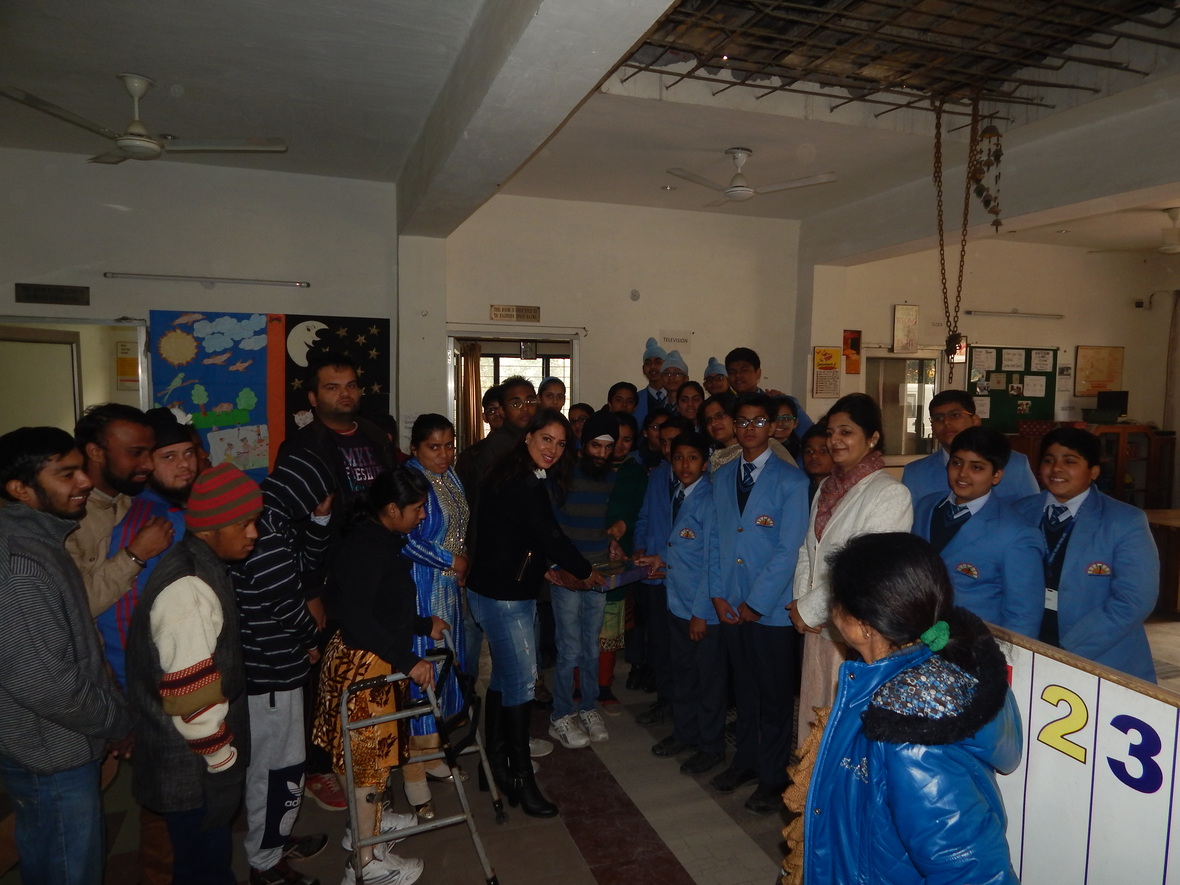
As part of the last lap, the Satyans of the IAYP club were at Aashriwad on 24 January, 2017 to donate the proceeds raised through the sale of 700 diyas, 100 envelopes, and 50 paper bags. In an endeavour to support the cause, Satyans purchased the diyas, painted and decorated them and sold them on Sports Day at the school campus. With the funds raised the school purchased two ASUS notebooks.

It was a heart warming sight when the two ASUS notebooks were handed over to Ms. Sanam Mehra, member on the advisory board Aashriwad and Ms. Reshma, Coordinator of the IAYP Programme. Satyans have been working very closely with the AMBA Project initiated at Aashriwad. This project is truly an empowerment project, where 22 students are being trained to pursue data entry as their profession. It aims at moving the students from Dependence to Independence. More pictures can be found here.

Wednesday, 28 September 2016

IAYP Orientation Programmes and Introduction


Bivujit Mukhoty, Programme Manager, delivered a Student Orientation Programme on 2nd September, 2016 at Sir Padampat Singhania Education Centre, Kanpur. This orientation was attended by 40 Award aspirants along with the Award Leaders of the school. Mr. Virinder Singh Moudgill, Principal, also attended the orientation programme.

On 23rd September 2016, the Programme team delivered a One-day Award Leader Training Workshop to 28 participants of Vidhyashram International School, Jodhpur. The Programme Manager shared details about the four sections of the Award along with the framework and philosophy. The training was concluded by awarding the training certificates to the participants by Dr. Bharti Swami, Principal. On 24 Sep 2016, Bivujit Mukhoty visited Bodhi International School, Jodhpur and met with Jay Sharma (Principal) and introduced the Award Programme to the school.

On 26th September 2016, the Programme team visited Maxfort School, Dwarka, Delhi and The Indian Heights School, Dwarka, Delhi and delivered an Orientation Programme to Teachers and Students.

I have Witnessed a Transformational Experience

Sukanya Khan, Award Leader from Dhirubhai Ambani International School, Mumbai sharing an inspiring experience with an Award Participant.

My profession as a high school Physics teacher requires me to spend about one-third of each day with teenagers. While the process of nurturing curious young minds is intellectually very stimulating and gratifying beyond words, there have been times when looking through the one-dimensional lens of academic performance, I have felt inadequate in my understanding of a child whose world extends way beyond the confines of the classroom. So when, five years ago, the responsibility of coordinating the IAYP at my school was handed over to me, I knew that a new chapter had begun in my journey as an educator.

I had been closely associated with a number of service initiatives even before my association with IAYP began and working closely with cancer patients and their caregivers was one of them. Every week I would accompany a handful of students to the facility in the neighborhood where the volunteers would chat with the adults, play with the children and generally try and engage them with activities that would take their minds off from their illness, albeit for a brief period. In my first year as the coordinator, I witnessed a transformational experience there. A student named Aman joined this group of volunteers and after his first visit, requested me to shift him to a different service activity. He said that the sight of the patients, many of whom were amputee children, with their shaven heads was too depressing for him. His friends and my colleagues weren’t surprised by his reaction and they told me that Aman possessed neither the sensitivity nor the empathy and level of commitment required for a service activity of that kind and it was likely that the reason for his initial interest was the fact that the facility was close to his residence. I found out that in addition to being at the bottom of the pile in academics, sports and co-curricular activities, he had gotten into trouble in the past due to his irresponsible behavior. I was also made privy to the information that he had been advised to meet the counselor.

I cannot remember the reasons for my judgment on the basis of which I sat him down and requested him to visit the facility just once more with me. Once we were in the facility, I stayed next to him all the time, gently asking him to speak to the children in the local language and make an effort to make friends with them. As the afternoon came to an end, I found myself at the corner of the room opposite to where Aman was. While he was teaching Bollywood dance steps to a four year old, my eyes were welling up with pride.

Aman turned out to be the most dedicated student towards service in his entire batch. It was his idea and initiative to engage with care givers and patients in painting diyas and making greeting cards and gift pouches. The funds raised from selling those were used for purchasing sewing machines and utensils. Aman ran extensive and aggressive campaigns that in addition to cash donations, led to two computers being donated to the facility. He was one of the volunteers who taught computer skills to the inmates after school hours. Last but not the least, his painting on canvas, depicting the varied hues of life, was auctioned at the school fete and raised two lakh rupees for the patients.

It might sound like a fairy tale, but it is true that Aman’s experience at the facility through the IAYP Programme gave him the confidence that he had never experienced before. His grades began to improve and his inner turmoil found a beautiful outlet through his paintings.

Wednesday, 16 December 2015

The Award allowed me the opportunities that fueled my passions in life

Canadian Gold Award holder Jessica Silva, one of eight new Emerging Leaders to sit on the International Council (IC) shared her Award Journey at the Duke of Edinburgh's International Award Forum 2015 at Toronto

I remember dragging my father into the room as my Bronze ceremony commenced.  He was a bit confused as to why I was so in awe with the young gentleman who sat at our table. Mr. Craig Kielburger, the founder of Free the Children and Me to We, was our guest speaker for our Bronze Award Ceremony and who had the pleasure of sitting at his table? Myself and a few students from my High School. As my father casually made conversation with him, I kept nudging him so as to warn him that he was infringing on the "embarrassing" territory and he needed to simply "stop talking". My father was still confused as to what Mr. Kielburger's role was until he got up to the podium to speak.

Mr. Kielburger began with a story. He shared with us his adventures in Ecuador where he and his team of volunteers were attempting to finish building a school, however they had underestimated timing needed to complete their plans as they were unable to finish building the school in time. Concerned, Mr. Kielburger went to the chief of the village and in an apologetic tone, explained that he and his team were unable to finish the school they were attempting to build for the community. The chief simply explained that there was no need to worry. Mr. Kielburger was confused and thought that the chief had not understood what he was saying. The chief laughed and said he would call for a "minga". Mr. Kielburger left confused, however to his surprise he would learn the meaning of this word "minga" when he woke the next morning.  As villagers from surrounding villages pilled in to help with the school, Craig understood the power of "minga".


Mr. Kielburger explained that there was no direct translation for the work "minga"   however he roughly translated it to mean " the coming together of a community for the greater good". It was at my Bronze Award Ceremony where this very sentiment was engrained in my head. The idea of the power of a community to affect change came to be the very sentiment that fueled my passion and dedication to international development work and advocacy on behalf of the marginalized. Moreover, It was also the thread that held together my personal journey with the Duke of Edinburgh's International Award.


After Mr Kielburger's Speech, my father, an avid traveller, began to ask questions about Free the children's upcoming trip to China during the summer of 2007. About three months later, I was booked on a trip of a lifetime where I began to experience the meaning of community, non formal education, and most of all the importance of taking advantages of opportunities that present themselves when you least expect it.


The Duke of Edinburgh's Award, was complimentary to those activities that I was so passionate about pursuing like community service with the homeless in Toronto or learning another language like French. However, I always found it challenging to meet the requirements for the adventurous journey as Toronto, which I am sure you have all realized by now, is not the most outdoorsy place. How could a young woman like myself pursue an adventurous journey when I live in an urban setting. Thankfully, the Award allowed for flexibility with the qualifications for an adventurous journey and my trip to China qualified for my Silver adventurous journey.


In keeping up with the momentum, I continued my Gold Award at the age of 17. However, I slowly began to lose not only my motivation for continuing the Award but also the reason for which I was doing the Award. I began to get tied down with school work, other personal aspirations, and most of all my passions lead my to pursue other opportunities that arose at that time. Before I knew it, I had stopped working on my Gold Award at the end of high school.


Throughout the years, I always worked towards saving up for a trip of a lifetime and for me that was during the Summer of 2011. In my second year at university, I was selected to attend as one of 10 students from my university on an international health field placement in Zambia. We lived in a compound outside of Lusaka and were fortunate enough to work alongside locals. My personal project was working with rural female gardeners and creating a social enterprise project to increase their livelihoods and hopefully, create more opportunities for a sustainable income. It was then where I realized my privilege of having experienced the Award programme. I knew that I had put that opportunity on hold for the moment and as life progressed, I forgot about the aspirations of that young girl who met Craig Kielburger. He challenged us to be that change we want to see in the world and the Award challenged me to push myself to my limits. It was not until I was living alongside those who were not as privileged as I, where I realized just how grateful and lucky I was to be afforded the opportunity of choosing to partake in such an Award programme.


From there, I decided that I would return to Canada and complete my Gold Award as an independent participant. Fortunately enough, my backpacking exploratory journey that I conducted after my health field placement qualified for my adventurous journey. I worked as quickly as I could and dedicated my time to completing my Award. I was so proud to have achieved my Gold. However, when I attended my Gold Award ceremony, I remember being a little taken aback at just how much judgment and lack of collaboration there was at the Award ceremony. As I am a friendly person, I tried to build relationships with those around me, however they were in no way, interested. Moreover, they shared with me stories that alluded to their privilege. I thought back to those whom I had worked with in Zambia and realized that from that point on, I wanted to provide the opportunity of the Duke of Edinburgh's International Award to those who were less privileged in Canada. This was my plan then and is still my plan as I stand here today. 


Personally, I would like to thank the Award for allowing me the opportunity to not only gain useful life skills but to also pursue those opportunities that fueled my passions in life. The Award programme's flexibility allowed for me to take a break and pick right back up from where I started. I feel that without that, I may not have completed my Gold Award.


For the Award's future, it is my hope to see the Award flourish amongst the marginalized, of course giving careful definition to whom we define as marginalized. Personally, I think there is the opportunity to establish many partnerships with universities, community colleges, youth programs and even youth clubs where we can present the opportunity to create collaborative models to delivering the Award and more importantly creating a "minga" where youth feel supported throughout their Award experiences. If I may dream so big, I would also love to see more collaboration between countries to creating support for Award participants and Award holders in accomplishing their personal goals outside of the Award. I feel that through networking and creating partnerships, we can all do our part to ensuring the growth and longevity of the Award programme.

Wednesday, 16 September 2015

Adventurous Journey to Scottish Highlands: A report by Aayush Srivastava

As the last leg of my Gold Award (International Award for Young People), I went to an adventurous journey in a place called Great Glen in the Scottish highlands. The Great Glen is one of the most spectacular geographical features of the British Isles. The ten-day trekking trip started on February 2nd 2015, the day I boarded a train from London King's Cross to Edinburgh in Scotland. After this six-hour journey, I boarded another train to Glasgow, and finally from Glasgow Queen Street it took another four hours to reach Fort William, where I met other colleagues, guides and settled down in the chalets there. Fort William acted as the nodal point of the trip from where we would trek radially to different places the following days. Scotland, like the entire United Kingdom, is known for unpredictable weather and being a person from India, the extreme cold is something I always dread. Anyway, we were lucky with the weather. The first three days were very gloomy, but the rest of the trip was good sunshine and blue skies. The main highlight of this entire trip was not just adventures but also getting an insight into the ice advance in the region, considering this part of Scotland has witnessed serious climatic changes in the recent past. 

The first day involved an expedition to Ballachulish and Corran. We all found it challenging as it was raining a lot and that added to the bone-chilling weather. Well, that made the entire group ready for the following days as it was just the start! For me, the sky-lift to the highest peak of Scotland was the attraction of the day. To my surprise, the sky lift was open (with very little safety provided!). For an acrophobic person like me, it was a really tough experience, however the stunning scenic beauty at the top made up for it. The next two days, we travelled to Arisaig and Achnacree respectively, where we scaled several hillocks and did coring at several sites. Coring is actually a tiring job, especially when the weather is not supportive and the land is all marshy, nevertheless, it's very important to understand the soil beneath and inferr other information from it. 

The fourth day, the sun was kind and we trekked to Loch Lomond, the largest lake in Great Britain. It is also a very popular boating site and we all did various water sports. I myself went canoeing and really enjoyed it. The following day we went to a national park on the other side of Loch Lomond, a site considered very sensitive to environment changes and home to various indigenous flora and fauna. I was lucky enough to spot a golden eagle and a herd of red deer. The park is so big and dense that we really had to walk a lot to get a glimpse of a few animals. The sixth day we went to see the great "parallel roads" of Scotland which are actually shorelines of a past ice-dammed lake, which are at considerable heights. The "roads", slashing through the hills have left scientists baffled for really long. Below these "roads", we saw the River Roy which splashes down its rocky course, surrounded by a narrow strip of woodland. 

The seventh day marked our journey to Drumlochter which bears the marks  of massive glaciation with  its legacy of moraines, eskers, raised beaches and ice dammed lakes. This place has some really rugged terrain which makes it a paradise for people looking for 'adventurous treks'. We did, however, scale much height owing to security concerns but it indeed looked stunningly tempting. The eighth day was the relaxing day for us and most of us chose to stay in our chalets and enjoy local Scottish cuisine. The ninth day saw us again exploring a new lake, this time Loch Etteridge. It's a relatively longer lake than Loch Lomond and we were to boat till its centre and collect some cores from the surface underneath. Boating all by yourself in a big loch was a certainly memorable experience. The local birds and bright Sun added to the memories and the coring, generally a tough task, finished in no time. 

Like every good trip has an end, we too had to head back to London on the tenth day. Early in the morning, we left our chalets and boarded the train to Glasgow from Fort William. As it is verily said, the very basic core of a man's living spirit is his passion for adventure, I thoroughly enjoyed this trip which not only introduced to me a new dimension of adventure but also brought me closer to nature.  Click for pictures

How the Award Programme transformed differently-abled participants

Rupanjan Goswami, Award Leader, Ramakrishna Mission Blind Boy's Academy, Narendrapur, Kolkata reports on the Award Programme at the Academy.

Ramakrishna Mission Blind Boys' Academy, Narendrapur, Kolkata -- a pioneer institution for visually differently-abled boys in India -- has been participating in the International Award for Young People (IAYP-INDIA) since 2002. This institute provides various forms of support to the boys to assist in mainstreaming them into society.

The R.K.M.B.B.A offers multifarious activities inside one campus, such as a residential setting, vocational training centre, braille press, agricultural training centre, talking book production centre etc.  The ambience and infrastructure of the academy gives enormous support to the students for their all-round development, so that they become contributing members in our society. We aim to nurture them as leaders in our society and don't regard them as differently-abled; we encourage our boys to tap their potential.  With the introduction of the Award Programme, these participants proved that they do not need to be treated as differently-abled. The National Award Authority is treating our participants at par with other participants and this has boosted their morale and self-esteem. Our boys follow the same programme and perform the same tasks allotted to other students, successfully scaling all the parameters required by the Award.

We all know that the Award is challenging and not easily attained, but our participants accepted the challenge bravely, completing all the sections within the time frame.  Here is an account of the different activities in which the participants are involved. 

SERVICE
The participants undertake Service to develop a lifelong commitment to society as civic or social volunteers.  They take up different subjects as part of their Service Section such as Environmental Management, Cleaning drive, Braille teaching, Food Serving etc. in the school's hostels. All their activities are strictly monitored by the Award Leaders.  We have noticed the benefits of Service among the participants. The Service section of the Award enhances their patience, tolerance and feelings of fellowship. It helps them deal with fear, ignorance and apathy, which are the main barriers to achieve a sense of responsibility towards the society. We have also noticed an improvement in their communication skills and sense of responsibility.  The Award has helped them break the barriers and fears that inhibited them from being involved in social duties and responsibilities.

SKILLS
For their Skills section our participants choose one of these subjects: Chess, Clay Modelling, Classic Indian Music (Vocal & Instrumental), Computer (Jaws supported), and Hand encrypted Braille magazine production.  Under the supervision of concerned teachers and instructors the participants successfully complete this Skills section.  We have noticed their amazing transformation and the development of their talents.  Their self-confidence has been boosted as they become aware of their potentials.  After successful completion of the Award many participants have successfully established themselves as professional entertainers and performing artists. Skills section opens their scope to choose their livelihood too.

PHYSICAL RECREATION

Our Award participants take one of these: Yoga, Swimming, Cricket, Football, Athletics (Track & Field) etc. as their Physical Recreation. Our Academy has a standard swimming pool and well maintained playgrounds. Under strict guidance of qualified swimming instructors and physical instructors and coaches our participants develop their physical ability and fitness and adopt a healthy lifestyle and habits.  Their sense of achievement emerges and they learn how to work as a team when they approach team sports like cricket and football.  

We are proud to inform that some of our Award participants among the best swimmers in our country.  These participants lift more or less all the medals and trophies in the State and National level swimming competitions for the visually challenged youth. Not only that our participants lift most of the prizes in the Pare-Olympic games, where they take part regularly. One of our participants took part in the International Para-Olympics in Germany.  In cricket our Award participants also lift trophies in National and State level tournaments consistently. We believe everything is going in the right direction due to the structured approach of the Award programme.

ADVENTUROUS JOURNEY
This is the most awaited section for our participants. They regularly take part in Adventurous Journeys to different, challenging, unfamiliar locations.  Sometimes it is altitude trekking in the great Himalayas, sometimes it's Coastal Trekking along the seashore of the Bay of Bengal and sometimes it is in the invincible mangrove forests of the Sundarbana. At other times they attend nature camps and rock climbing courses along with training on survival in different critical and hostile climatic conditions.

Since 2002, Adventurous Journey are being organised and evaluated by the the Institute of Climbers and Nature Lovers (ICNL). Qualified, experienced and die-hard ICNL instructors supervise the Adventurous Journey segment strictly. There are no modifications or adaptations to make the Adventurous Journey of our participants smooth or easy. These visually challenged participants face the same challenges, same conditions and same tasks given to their sighted counterparts.  The participants enjoy the practical phase of strenuous rock climbing and survival courses.

This segment of the Award programme enhances their leadership skills, improves their planning and organizational ability, and helps to understand group mentality and dynamics and role of others along with their own roles. Adventurous Journey section develops their self-reliance, independence along with enhancement of their mobility and sense of orientation in the lap of mother earth.  Adventurous Journey improves their skills for working as part of a team and skills for overcoming challenges

RESIDENTIAL PROJECT
To enhance experiences through involvement with others in an unfamiliar residential setting, our Gold Level participants take up different subjects for their Residential Project. Some participants choose activity based projects like outdoor sports, skills development by joining cricket and football coaching camps, some of them select environment and conservation projects in unfamiliar locations and work in restoration program of rural religious temples and mosques, village roads and dikes.  Some participants take personal training course like Spoken English course, Computer course, etc.

Our participants take all these challenges wholeheartedly and complete their Residential Project as perfectly as they can.  We get remarkable response from the society, Village people who tell us that they are being inspired when they watch our participants help and solve the village's problems with their own hands and can't resist joining in with our participants.  We feel great when we see our participants successfully strike on the apathy of the village people for their own problem. This is what we can call leadership. We also notice that our participants are getting accustomed to unfamiliar places and unknown people with enriched sense of responsibility and communication skills.  They are able to build new relationship with different people regardless of their age, race and religion.  We believe this segment broadens our participants' outlook and horizons, which is the sparkling philosophy of the Award.

ARRIVAL OF NEW LEADERS
Our visually challenged participants have emerged as leaders in society after successful completion of the Award and their education in our institution.  A few decades ago visually challenged people were subject to be ignored and were often considered permanent liabilities of society. But assimilation of the philosophy of the IAYP with the ideology of world famous spiritual organization Ramakrishna Mission Ashrama has changed the scenario.  Our participants emerge as the leaders in society.  In their life they become teachers, lecturers, professors in the schools, colleges and universities. Some of them join in different Govt. sectors and private sectors companies even as IT professionals.  Some of them choose different types of business, like one Award participant has established his own FM radio station along with an ultra-tech sound recording studio.  Some of them are working as radio jockeys.  Some participants have founded a professional rock music band named X-RAF, which has attracted national fame within a short span. Click for pictures

Wednesday, 9 September 2015

Photography has developed my sense of colour balancing

Mridul Upadhyay, Gold Award participant from the Open Award Centre is sharing his experience as he learns photography for his Skills section

I was introduced to the Award programme during my visit to Sri Lanka to cover the Commonwealth Heads of Government Meeting. I applied as Open Award Participants for Gold Level and set my goals, which I have completed now. 

Photography was my goal for the Skill section. I was interested in photography because of my artist friends, who helped me develop a sense of colour balancing and framing. Previously, I was able to take average frames from a point-and-shoot camera but DSLR camera opened more opportunities with 'Manual' mode.

When I first started photography, I was very puzzled about aperture (A), shutter speed (S) and ISO. I call this the "Illuminati triangle of confusion" because they're all linked to each other and I couldn't differentiate the effects between them by reading.
But one thing made it easy for me. Eyes! Our eyes pretty much work the same way as a camera. The light passes through our pupil, via the hole of the iris, and focuses it on the retina.

SHUTTER SPEED
The pupillary light reflex is the reflex that controls the diameter of the pupil, in response to the intensity of light that falls on the retina of the eye. In other words, when you stare at something bright, our iris shrinks and the pupil becomes smaller, so less light penetrates through. 

"So shutter speed is the time for which you want to keep your stutter open to allow the light to pass through to the camera sensor." The higher the shutter speed, the more light is allowed through. When you are taking a picture in a place that's terribly bright (like directly under the Sun), then your picture would be overexposed (way too bright). So don't forget to reduce your shutter speed.

APERTURE
Stare at the room around you for a while. Slowly focus on an object in front of you. Keep doing it. Now, do you realize how everything around the object is blurred (the object becomes more prominent). But when you want to see a group/crowd/landscape, the same eye allows you to see everything clearly. That's exactly how aperture works.

Basically, aperture controls the depth of field in focus. When the aperture is greater, the depth of field of an image is shorter. In other words, the object in front of you is clear and the background is blurred out.

Aperture also controls the amount of light that reaches the image plane because aperture acts as the entrance of our eyes. Like our eyes, the pupil is the hole that allows light through in our eyes. 

"So aperture is the shutter size which you want to keep open for a particular time (shutter speed)." 

Aperture is calculated in stops (the size of the hole that allows light in). Same as the pupil of our eyes, the bigger the hole, greater the aperture, and more the light that passes. But here's the confusing part: aperture is measured with f/numbers on the camera. The smaller the f/number on your camera, greater the aperture: the more light that reaches the image plane, making the image brighter and more blurred background (less depth of field).

ISO
It is the measure of how sensitive your camera is to light. Basically, the image sensor, the one that controls the ISO, is the component that changes the camera's sensitivity and transforms the light into an image.

The higher the ISO, the more sensitive it is to light. Therefore, the camera sensor can capture images in a low-light surrounding without a flash when using a higher ISO number. But you need to give something if you want something. Higher sensitivity adds "noise" (grain) to your picture. The fine dots that make the picture look pretty bad.

So, my advice is to always stick to the lowest ISO number of your sensor. Basically, it produces an image with the highest quality and minimal noise! It also retains the most details of an image.

Also there are a set of rules for composition like rule of third, golden triangles and spirals, leading lines and leaving space etc. But photography is also more than rules.

So in a nutshell, shutter speed controls the amount of light; aperture controls the depth of field, and amount of light; ISO allows you to take pictures in dark areas without a flash, but it creates noise. Photography is all about balance of these three.

Don't worry if you still haven't gotten the hang of these three. Play around with your camera and you'll soon see how easy it is. It worked for me!  Click for few more pictures

Wednesday, 2 September 2015

Personality Development through Social Service

Sanganabasava International Residential School and Kavalagi village Panchayat have decided to collaborate for the overall development of the village by initiating a number of focused projects. The programme was formally inaugurated on 23rd November 2014 at the Kavalagi school grounds, in the presence of all the Award participants and mentors. The school has planned to build two blocks of 40 toilets (20 for Kavalagi and 20 for Honnutagi) each at two locations of the village as part of the Swachh Bharat Programme.

The ethical values that the school has nurtured in students was motivated by the "Clean India Programme" initiative of Prime Minister Narendra Modi. The Award participants in groups of four took an oath on 25th Sept 2014 to undertake the programme.

The development programme is planned to be comprehensive. It includes a basic literacy programme, a health development programmme and maintaining a plastic-free zone in Honnutagi & Kavalagi. The people from the panchayat attended the inauguration. A powerful video programme was arranged to educate the people about the perils of alcoholism and smoking. Thanking the school authorities and students for the development initiative, the principal in her concluding message said, "A happy, prosperous and peaceful life for every Indian is a dream that we should cherish and realize".

Besides this effort, a literacy campaign was also promoted in these two villages. Each participant adopted 10 people to be taught. This ongoing programme will contribute to the growth of the country and the development of the nation's citizens. Click for picture

Nature: A Commitment to Preserve and Nurture - A report by Manju Verma (Award Leader)

Award participants of Cambridge International School Phagwara, in their commitment to preserve and nurture nature, moved a step forward by adopting a local park in Phagwara city. The school took this initiative in a collaborative effort with the residents of Urban Estate Phagwara to improve and maintain the park.

Mr. Som Prakash, MLA Phagwara City, inaugurated the event. He motivated the participants to follow the Swachh Bharat Abhiyaan to keep the city, state and nation clean.

This initiative was further supported by residents and community members who will volunteer their time to improve the chosen park. All the IAYP participants and members present there pledged to keep the park clean and work on a variety of projects including planting and maintaining flower beds; maintaining the trails and paths; painting and caring for park structures; cleaning up litter; planting, mulching, and watering trees; and ensuring the park is well maintained. The Award participants also pledged to visit the park every Sunday. An inspirational song "Zariya" sung by the students of Cambridge International School strengthened the spirit of the movement.

Principal Jorawar Singh encouraged the students to preserve nature for our future generations. Pankaj Gautam, a leading businessman of the town and a great social activist also motivated the students to plant more trees. The event was initiated under the guidance of Anita Somprakash, Jaswinder Kaur (MC), K. S. Bains (Managing Director CIS), Jorawar Singh (Principal), Amarjeet Singh (Administrator), Pankaj Gautam, members of Urban Estate Phagwara, staff and students of Cambridge International School Phagwara.

Wednesday, 26 August 2015

A lesson to remember....forever...(Karaumbiah Academy of Learning, Gonikappal, Karnataka)

The KALians of Grade X were buzzing with excitement on a bright Friday morning, eager to get away from the monotonous ritual of classroom study. They were all set to learn a bit of the ways of Nature through the IAYP camp as part of their Silver Award.

The sky was blue, the air fresh and the surroundings a lush green, as the young KALians reached their destination to start their two-day trek up the Brahmagiri Hill, one of the highest hills of Kodagu. Guided by Mr. Ramesh Belegare and Mr. Krishna Murthy, two experienced nature conservationists, the team set out into the untouched wilderness, among leeches and wild elephants.

The eight-kilometer trek winded up stony paths crisscrossed with small streams which were refreshingly cold. Misty clouds blanketed the hills, keeping it fresh. The forest guides also kept us informed about the various life forms and trees of this magnificent belt of wildlife. The journey provided valuable information to the observant crowd about the various species of butterflies that are the jewels of the ecosystem. After almost six hours of climbing, we reached the "Narimale Resthouse" which would serve as our base camp. The place, constructed in the remote area shows the confidence of the workers and their hard work, yet the partial destruction caused by the pachyderms is a grim reminder of how they still dominate the area. The participants gathered firewoods themselves and drew water from a nearby stream and divided the work- girls do the cooking, the boys collect firewood and draw water. After a tiring day, the young participants sat by a campfire and were given a presentation on the importance of nature. After a sumptuous meal, the leech bites and thorn pricks did not hamper the enthusiasm of the participants.

The next day, the participants were divided into teams and were assigned various duties mainly to observe and report what they saw. Armed with pens, notebooks and cameras, the trekkers soon set forward to conquer the hill. On the way, various elephant signs were reported and deciphered with some help from Mr. Belegare. It just showed the importance of elephant conservation. The participants understood it and were aware that Elephants=forest=water=life=Us.

The participants also spotted deers, dholes and some birds which are also a vital part of the ecosystem. The behaviour of a female elephant when with her calf and the minute signs and actions done by her to protect her calf was truly admired by all.

Finally the team were climbing on all fours, in their final phase of conquering the hill and the view was indeed worth the trouble. Up on the peak, the participants were delighted to be "on top of the world" which provided a panoramic view of Kodagu-Kerala border, dotted with numerous peaks and lush green forests dotted with tiny villages in the far distance. We were beginning to realize that though people can climb a hill, they can't conquer it; we can only be infused with humility in the face of Nature.

The participants returned and after what seemed like tons of food, they gathered in the opening of the resthouse and discussed what the had learnt. Humility, respect, love and concern were some of the lessons learnt. How true!

The day ended and the participants slept for the last time under the stars, amidst nature, not affected by human expansion on a warm night.

The third day, the participants cleared the place up, tidied it and bid adieu to the resthouse and set off on their journey back to civilisation. Wisdom and a firm resolution to protect Mother Earth sparkled in the morning light in the eyes of the participants...  Click for pictures

Wednesday, 8 July 2015

My Award Experience


Amreen Kohli, Silver Award participant from Sat Paul Mittal School, Ludhiana is sharing her Award experience with us.

The International Award for Young People is a platform where students develop their social, physical and mental faculties by indulging in various sports activities, community service and intellectual/skill-based activities. The IAYP programme helped me develop my personality and become a well-rounded person who participated in a plethora of activities during this programme. We took part in the Labour Day programme, the Gadhimahi Candle March and the community-service-cum-adventure trip to Chail. In Chail, we experienced the thrills and chills of mountain climbing, valley crossing and rappelling. 

These activities gave us a break from the daily humdrum life, while giving our bodies some much needed physical exercise. The community service we did made us sensitive to the needs of the people around us. The IAYP programme aims to develop the skills of a child in every field. It has been an enriching experience to be a part of the IAYP programme. It helped me in becoming a confident and productive citizen of society, who cares about the well-being of others and herself. 

Wednesday, 1 July 2015

A visit to the Aiyur Forest


Award participants from The Ashok Leyland School, Hosur, Tamil Nadu visited the Aiyur Forest during their Award Journey.

The 27th of March 2015 will forever be etched in our minds as the day we visited Aiyur Forest, Krishnagiri District, Tamil Nadu. We were excited to see the forest full of bamboo trees, some of them 50 years old. Mr. Murugasen, one of the experienced forest guards, accompanied us and he helped us in navigating the forest tracks. Some tracks were steep and filled with dried bamboo leaves. At one place in the forest we stood still to drink in the sights and sounds of nature. We could hear the bamboo swaying in the breeze. We were scared to see bamboo trees bending so close to the ground under the strong wind.  We heard the endless chirping of birds and inhaled the exotic fragrance of the trees. The tranquility of the forest was soothing to the mind. The part we enjoyed the most was climbing on rocks and trees to view the valley.

We saw elephant dung here and there. Elephants had also uprooted a signboard. We were excited to know from the guard that elephants would visit the water source. The forest guard described to us elephants' behaviour, his encounters with elephants, poachers etc. All this added to our mounting curiosity to see the elephants and we waited calmly near the waterside for the pachyderms.

We interacted with local women who were collecting and winnowing bamboo seeds and they said that they prepare rotis with these seeds. They offered us some to taste.  We also interacted with another guard Mr. Rahmed Abdulla, who had once rescued a bear that had fallen into a well.

We pitched tents using staves and ropes and we enjoyed the activity thoroughly.  The trip to the Aiyur Forest was the most adventurous trip of our life. We departed from the forest carrying unforgettable memories to cherish.

Wednesday, 3 June 2015

Experience of IAYP...


Shivani Verma, from Jodhamal Public School, Jammu shares her Silver Journey experience with the Award family.
Since childhood I have been interested in painting and it was thanks to the IAYP that I had a platform to display my talent which was widely appreciated by my teachers. I have always been a shy person but participating in the IAYP programme helped me overcome my shyness and also prove my worth as a good artist. IAYP activities helped me hone all spheres of my personality from my speaking skills to confidence level.  So, I am really thankful for this great opportunity through which I discovered my true potential as a person as well as an artist.
Even the adventure camps opened new horizons for me because of which I came closer to nature, capturing through my paintings, the beauty that I saw around me. I hope you appreciate my paintings and feelings behind it.  And the credit obviously goes to IAYP. IAYP taught me to "Dream big and be realistic because the sky has no limit".

Wednesday, 13 May 2015

Bronze Level Adventure Camp at Wangini

The Bronze Level aspirants of Lodha World School, Thane went for an adventure camp to Wangini near Matheran.  The purpose of the camp was to allow the participants to learn as well as to try their hand in adventure activities. The trip was scheduled for five days from the 7th to the 11th of April 2015. 

The morning session for four days began at 07.00 am. Breakfast was followed by adventure activities which the participants looked forward to.  During these four days the participants went through Rappelling, Rock Climbing, Hurdles, Jungle Gym, Raft building, Rowing, Flying Fox, Archery and Shooting.

The participants said that they found the experience thrilling and challenging. Some of them were very excited that they had managed to climb the 50 foot tower. They took great pleasure in aiming straight at the target and trying their hand at shooting. One of the participants remarked that 'Fear is like fire, it will burn till you fuel it', and these activities have helped them overcome some of their fears. 'When we made the rafts and went rowing we realized the amount of strength we have in our hands,' said one of the girls. They also remarked that they learned to work as a team.

Every day the participants returned to help in the kitchen. They took turns to prepare a dish under the guidance of the staff. The participants treated their classmates and teachers to a variety of tasty dishes such as pulav, mixed vegetable sabji, chole puri, etc. It was a proud moment for the participants when they showcased their culinary skills. 

In the evening, the participants played a number of interesting games which required both skill and presence of mind. At night they were taken for a silent walk to the river bank for star gazing. Wangini is a place where astronomy camps generally come to carry out star gazing activities. 

The participants enjoyed themselves thoroughly, lying on the rocks and reveling in the silent murmur of the river -- an experience which according to them will always remain etched in their memory, as it is not one which they could dream of experiencing in Mumbai.

The camp provided wholesome experiences, where participants learnt to work in a team, coordinating with each other and mutually sharing responsibilities.  They continually kept motivating their friends who had certain fears. The activities like making their own raft and rowing taught them the need to work in a systematic and responsible manner.  The culinary activities brought forth their ability to divide and delegate the different tasks, ensuring that they turned out excellent and tasty food.  Surely the camp gave them opportunities to imbibe the values needed to become effective Leaders of Tomorrow in keeping with the motto of Lodha World School, Thane.

On the last night, before they started off for Thane, a bonfire and dance was organised.  The participants enjoyed themselves thoroughly and the trip ended on a high note for all of them. They are sure to look forward to more such adventure trips. This will also motivate them to seek the Silver Level of the IAYP too.   Click for pictures

Wednesday, 10 December 2014

Silver Level Adventurous Journey for Award Aspirants of GSSS Talwandi Sabo, Punjab

Ten Award participants from Govt. Senior Secondary School, Talwandi Sabo, Bhatinda, Punjab along with their Award Leader Narinder Kumar started their Adventurous Journey on 29th November 2014. Their aim was to explore the natural world, historic land use, the history of different religious places, their artistic and cultural nature and the impact of humans on natural resources.  This journey also aimed to develop a spirit of adventure and knowledge of new surroundings while on a group journey. The group reached Haridwar around 2.00 pm and trekked up to Mansa Devi Temple on the same day.  After the trek the group headed towards Rishikesh to set up their base camp. The next day the group started trekking to Neelkanth and explored the beauty of nature during this period.  After the trek the participants did River Rafting for around 10 kms from Shivpuri to Swargashram.  During this Award Journey all the participants showed their determination, put in their best physical effort and co-operated with each other in such a way that this adventure journey became a memorable event for them. Click to see pictures

Award Presentation Ceremony for Punjab Schools

The National Award Authority organised the Award Presentation Ceremony for the Government Schools of Punjab on 8th December 2014 at Mata Jaswant Kaur Memorial School, Badal.  Honourable Education Minister (Punjab Government) Daljeet Singh Cheema presented Awards to 126 Bronze and 11 Silver Awardees (69 Girls and 67 boys). Dr. Kamal Kumar Garg (Director Public Instructions - Secondary Education), Ms. Darshan Kaur (Director Public Instructions - Elementary Education), and Ms. Snehlata (Dy Director Policy and Award Coordinator Govt. of Punjab) were also present during the ceremony.  Kapil Bhalla (National Director) and Bivujit Mukhoty (Programme Manager) representated the IAYP.  After the ceremony the participants had the wonderful opportunity of meeting the Honourable Chief Minister of Punjab S. Prakash Singh Badal and C Raul, Principal Secretary School Education, Govt. of Punjab. The NAA Team would like to express special thanks to Col. Anand Swaroop, Principal Mata Jaswant Kaur Memorial School, Badal and all the Award Leaders and Volunteers who helped in organising this event.  Click here to see pictures